China Top Home Health Monitoring Devices Suppliers?

China’s home health monitoring devices sector spans blood-pressure cuffs, fingertip oximeters, digital thermometers, glucose meters, and wearable ECG monitors. For overseas buyers, the challenge is not finding factories. It is distinguishing dependable manufacturers from attractive catalogs. A clear supplier review should examine product range, clinical evidence, manufacturing quality systems, software support, and after-sales service.

Grand View Research’s Remote Patient Monitoring System Market report estimated the global market at USD 14.0 billion in 2023 and forecast a 18.6% compound annual growth rate from 2024 to 2030. This is a market estimate, not proof that any individual Chinese supplier meets clinical needs. Joseph C. Kvedar, MD, a connected-health specialist, has put the shift simply: “The future of health care is in the home.” His observation helps explain why accuracy, ease of use, and reliable data transmission matter beyond the factory floor.

A useful shortlist should compare device specifications against test records, ask how measurements are validated, and check whether mobile apps work consistently across common phones. Request samples. Inspect labeling, calibration documentation, warranty terms, and response times for technical support. These checks are practical, not glamorous. A polished catalog can still hide weak validation, and a certificate alone may not answer every clinical question. This guide examines leading China-based suppliers and the evidence buyers should request before choosing a partner.
China Top Home Health Monitoring Devices Suppliers?

What Home Health Monitoring Devices Include

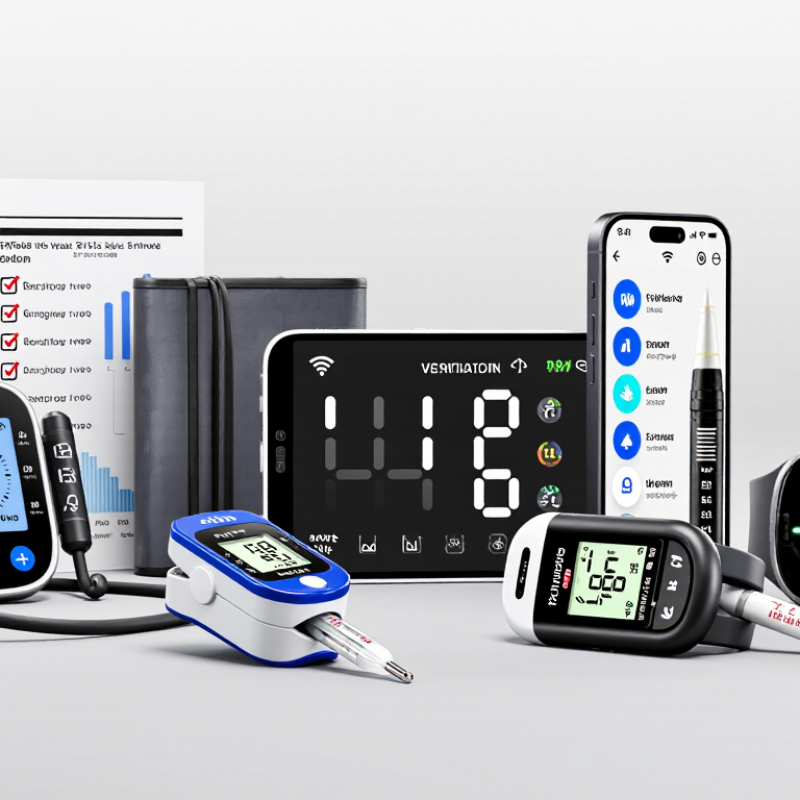
Home health monitoring devices bring selected measurements into everyday routines. Common examples include digital blood pressure monitors, thermometers, pulse oximeters, blood glucose meters, and weighing scales. Some people also use portable ECG recorders or peak-flow meters when advised to track a specific condition. The right device depends on what needs monitoring, not how many readings it can collect. Small details matter.

A blood pressure cuff should fit the upper arm and be used after a few quiet minutes of rest. Check the fit. Thermometers use different measurement methods, so readings are easier to compare when you use the same method each time. A pulse oximeter clips onto a finger and estimates oxygen saturation and pulse. Cold hands, movement, and nail products can affect its readings. Glucose meters measure a small blood sample, while scales are more useful for noticing gradual weight changes than judging one day’s result.

These tools support observation, not diagnosis.

A precise-looking number can still mislead if technique is poor or the device is unsuitable. Follow the instructions, check batteries and supplies, and discuss unusual or persistent readings with a healthcare professional. I would not treat every fluctuation as meaningful; daily activity and hydration can change measurements. Some devices store readings in apps, so check privacy settings and whether the interface is clear enough to use consistently.

How China’s Supplier Market Is Organized

China’s home health monitoring supplier market is not one uniform group. It includes device developers, contract manufacturers, component specialists, and export-focused trading companies. Some factories design and assemble complete devices. Others supply sensors, cuffs, circuit boards, or packaging. A polished catalog does not always reveal which role a supplier performs. That can be tricky.

The market is organized across both production stages and sales channels. An OEM partner may build to a buyer’s specifications, while an ODM supplier may offer an existing design for adaptation. These labels are not always used consistently, so verify actual capabilities. For blood pressure monitors, thermometers, and pulse oximeters, ask who handles calibration, final testing, and technical support. Request sample inspection records and confirm that product documentation matches the intended sales market. Factory visits can help, but a visit alone is not proof of consistent quality. Small details matter.

Tips: Ask for a process map, recent quality records, and clear answers about subcontracting. Compare samples with production units. Leave room for follow-up questions; supplier directories can be outdated.

China Top Home Health Monitoring Devices Suppliers? - How China’s Supplier Market Is Organized

Market-structure overview, not a supplier ranking. Capabilities, product scope, and regulatory documentation vary by manufacturer and should be verified for each product and destination market.

Supplier Type Common Product Categories Typical Role in the Supply Chain Capabilities Buyers Commonly Assess Key Due-Diligence Checks
Original equipment manufacturers (OEMs) Digital thermometers, blood pressure monitors, pulse oximeters, and weighing scales Manufacture products to a buyer’s specifications, which may include the buyer’s packaging or label. Production capacity, component sourcing, assembly controls, product testing, and packaging options Confirm who is the legal manufacturer, whether the exact model has the required market-specific approvals, and how production changes are controlled.
Original design manufacturers (ODMs) Connected blood pressure monitors, thermometers, pulse oximeters, and other app-enabled devices Offer an existing design or platform that can be adapted for a buyer’s market, software, or branding needs. Hardware customization, firmware or app support, language options, data connectivity, and design-change management Clarify ownership and licensing of designs, software, data interfaces, and technical files; verify that changes do not affect product approvals.
Specialist device manufacturers Blood glucose meters and test strips, electrocardiogram monitors, and other category-specific devices Focus on a narrower product range that may require specialized components, consumables, or technical expertise. Measurement performance, consumable compatibility, calibration processes, and product-specific quality controls Review evidence for the complete system, including compatible consumables where applicable, and check labeling, shelf-life, and storage requirements.
Contract manufacturers Assemblies and finished devices across several home-monitoring categories Provide manufacturing or assembly services based on a customer’s design and production requirements. Process validation, traceability, supplier controls, inspection procedures, and production scaling Establish responsibility for design, regulatory submissions, complaint handling, and corrective actions in the manufacturing agreement.
Component and subassembly suppliers Sensors, cuffs, probes, displays, circuit boards, batteries, and molded housings Supply parts to device makers rather than necessarily selling complete, market-ready monitoring devices. Component specifications, consistency between production lots, change notification, and supply continuity Confirm approved specifications, component traceability, material documentation, and the effect of substitutions on the finished device.
Exporters and trading companies Multiple device categories sourced from one or more factories Coordinate quotations, export documentation, order consolidation, and communication between overseas buyers and factories. Factory access, order coordination, export experience, and clarity about subcontracting Identify the actual factory and legal manufacturer for each model; verify authorization, product documentation, and accountability for quality issues.
Private-label and channel suppliers Finished consumer devices prepared for retailer, distributor, or healthcare-channel requirements Package and supply finished goods for a defined sales channel, sometimes using an OEM or ODM production base. Label and packaging customization, order planning, language support, and after-sales coordination Check that labels, instructions, claims, and any required local registrations match the destination market and responsible legal entity.

Which Chinese Suppliers Lead the Home Monitoring Sector

China’s home-monitoring leaders are best identified by manufacturing depth, measurement consistency, and connected-care capability—not by export volume alone. Suppliers in China produce digital blood-pressure monitors, pulse oximeters, thermometers, and connected weighing devices. A strong supplier can show repeatability data, clear calibration procedures, stable app syncing, and reliable battery performance. Small details matter: a cuff that fits poorly can undermine an otherwise useful reading.

Demand is growing. China’s National Bureau of Statistics reported 296.97 million people aged 60 or older in 2023, equal to 21.1% of the population. Grand View Research valued the global remote patient monitoring market at about US$14.0 billion in 2023 and forecast 18.9% annual growth from 2024 to 2030. These figures support a larger opportunity, but they do not prove that any supplier leads on clinical quality.

Rank suppliers by verified test records, manufacturing controls, software support, and after-sales response. Ask for sample data across repeated measurements, not just a polished demonstration. The evidence is uneven. Public supplier comparisons rarely use identical testing methods, so rankings can be misleading. A useful assessment also checks how devices handle weak Wi-Fi, low batteries, and older users who may struggle with small screens.

How Suppliers Compare by Products and Capabilities

China’s home-health monitoring suppliers vary in product range and in how reliably their devices support daily care. Common offerings include blood-pressure monitors, thermometers, pulse oximeters, glucose meters, and connected wearables. The World Health Organization’s 2023 Global report on hypertension estimates that 1.28 billion adults aged 30–79 have hypertension; nearly half are unaware of their condition. That makes easy-to-read displays and consistent measurements practical priorities, not optional extras.

Compare suppliers by asking how they validate accuracy, manage calibration, and test devices across repeated readings. Check whether readings transfer smoothly to a phone or care platform, and whether users can export them in a usable format. A broad catalogue can be useful, but it does not prove quality. Ask for test documentation, clear instructions, battery-life figures, and a realistic process for handling faults. A detail often overlooked: can an older user operate the device without help? Supplier responses may sound polished; the evidence matters more.

Tips: Request sample units and test them with real users. Compare the instructions, screen readability, and support response time—not just the quoted specifications.

What Buyers Should Check Before Choosing a Supplier

Before choosing a China-based home health monitoring supplier, examine evidence, not polished product photos. The World Health Organization’s 2023 Global Report on Hypertension estimates that 1.28 billion adults aged 30–79 have hypertension worldwide. Nearly half are unaware, making dependable readings and clear instructions important. Ask for independent validation against recognized protocols, such as ISO 81060-2 for automated blood pressure monitors. For other device types, request validation suited to that specific technology.

Check the supplier’s quality system and verify certificate scope, issuer, and expiry. Request test reports, calibration controls, lot traceability, and complaint-handling procedures. Confirm accuracy across the intended cuff sizes and user conditions. Test battery life, app compatibility, data export, and support languages with a sample unit. A sleek dashboard can distract from basic reliability. A good audit still cannot predict every field failure.

Tips: Request a pilot batch before placing a large order. Compare sample readings with a reference device under consistent conditions, and document any differences. Ask how software updates are tested and how replacement parts are handled. Vague answers deserve follow-up.