10 Essential Tips for Choosing the Right Patient Monitor for Your Practice
Choosing the right patient monitor is a crucial task for any medical practice. The right equipment can enhance patient care and streamline workflow. An effective monitor provides accurate and timely data about a patient’s condition. However, selecting the best option can feel overwhelming.
Many options are available on the market. Features vary widely, and not all models suit every practice. Factors to consider include screen size, alarm systems, and usability. Each choice impacts patient safety and healthcare delivery. Some monitors may lack essential features, making them less suitable for specific needs. It's vital to evaluate each patient's unique requirements.
Finding the right patient monitor requires thorough research and consideration. Integrating feedback from healthcare professionals can provide insights. Yet, the temptation to choose based on price alone can lead to future complications. Invest time in understanding how each monitor can serve your practice effectively. Balancing features with ease of use is essential for optimal patient care.
Understanding the Different Types of Patient Monitors Available
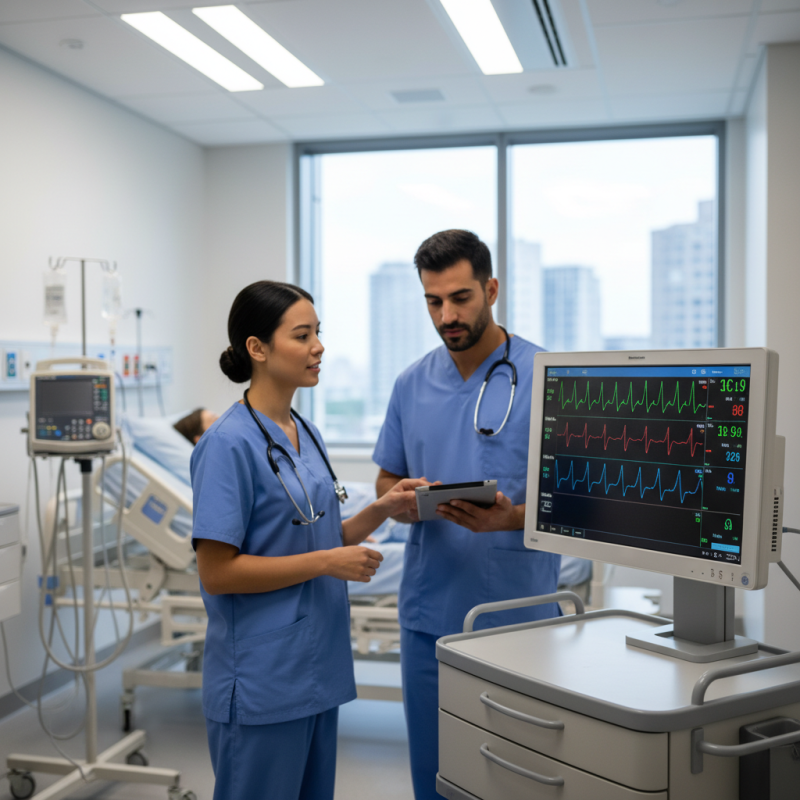
When selecting a patient monitor, it's vital to understand the different types available. There are vital signs monitors, which track key indicators like heart rate and blood pressure. These devices come in portable and stationary versions, catering to various clinical needs.
Moreover, there are multi-parameter monitors that provide a comprehensive overview of a patient's health. These can measure oxygen saturation, respiratory rate, and even temperature. The complexity of these monitors can be overwhelming. They require proper training and understanding to utilize effectively.
Some practitioners might choose simpler models initially. However, as their practice grows, they may find these basic monitors inadequate. It's a common mistake to overlook future needs while focusing on immediate requirements. Regular reflection on technology and its evolution can help ensure the right choice is made today for tomorrow’s challenges.
Types of Patient Monitors and Their Specifications
This chart illustrates the comparison of different types of patient monitors based on their key specifications such as heart rate monitoring, blood pressure monitoring, and temperature monitoring capabilities. Each type serves a unique purpose in patient care.
Key Features to Consider When Selecting a Patient Monitor
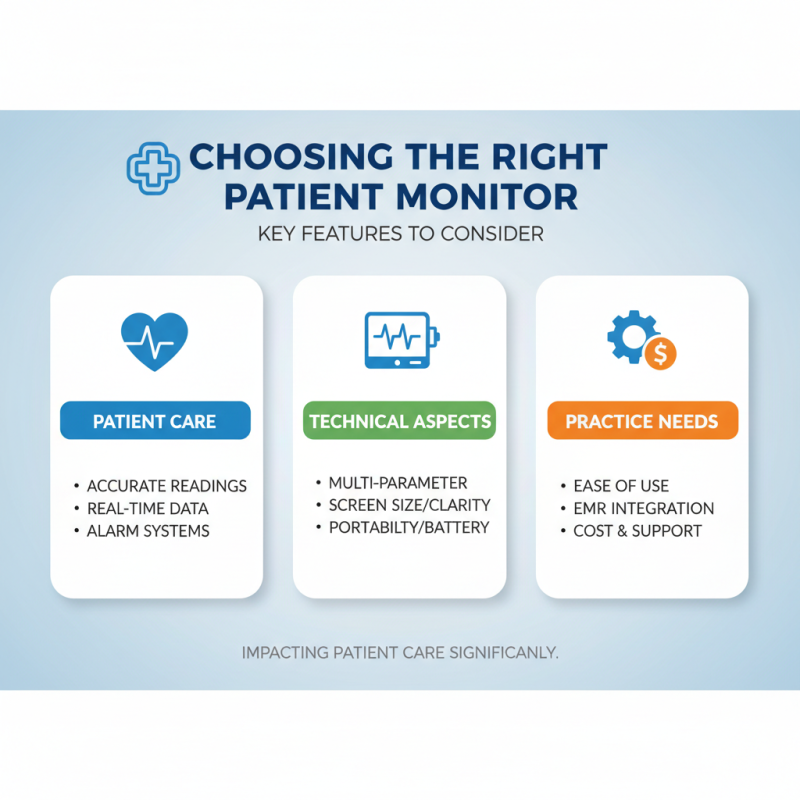
Choosing the right patient monitor is crucial for any healthcare practice. It can significantly impact patient care. There are several key features to consider when selecting a monitor.
One important aspect is the display size. A larger screen can show more data at once. This can be useful in busy environments. However, big screens can take up more space. Think about your workspace before deciding. Additionally, consider the monitor’s readability in various lighting conditions. Clear visibility is essential in emergencies.
Another key feature is connectivity. Many modern monitors allow integration with electronic health records. This reduces the need for manual data entry. Yet, always check the compatibility with your existing system. It's frustrating when devices don't connect seamlessly.
Moreover, battery life is a crucial consideration. A longer battery life ensures continuity during power outages. But remember, a rechargeable battery might also mean longer charging times. Evaluate how often the monitor will need to be recharged.
Finally, don’t overlook alarm systems. They should be adjustable and, ideally, customizable. Too many alarms can cause alarm fatigue among staff, potentially leading to missed critical alerts. Therefore, take time to test how the monitor responds to different settings. These features can help enhance patient care in your practice.
Assessing the Accuracy and Reliability of Monitoring Devices
When assessing the accuracy and reliability of patient monitors, several factors must be considered. Sensitivity and specificity are crucial metrics. A monitor should precisely detect vital signs without excessive false readings. For instance, a pulse oximeter needs accuracy in measuring oxygen saturation levels. If it reports incorrect data, critical decisions may be compromised.
Calibration is another vital aspect. Regular checks against standard benchmarks help maintain reliability. Over time, devices can drift from their original settings. Don't overlook the importance of user training. Staff must understand the limitations of each device. A well-trained team can spot anomalies and adjust accordingly. However, even the best training can't replace a faulty machine.
Look for monitors that offer user-friendly interfaces and clear displays. Complicated systems can lead to errors during emergencies. It's not unusual to find monitors that boast impressive specifications. Yet, real-world performance may differ. Consider seeking feedback from other practitioners or technicians. Their experiences can provide insights into a device's long-term reliability. Making informed choices is only part of the equation. Regular evaluations are essential to ensure that the equipment remains effective over time.
Evaluating Compatibility with Existing Equipment in Your Practice
When selecting a patient monitor, compatibility with existing equipment is crucial. Many practices overlook this aspect. New devices may not integrate well with older systems. This can lead to data discrepancies and workflow disruptions.
Take time to assess how a new monitor will fit into your current setup.
Consider the interfaces available on your existing equipment. Look for common protocols or connection types. If your practice uses specific software, the new monitor must work seamlessly with it. You don’t want to face unexpected glitches during critical moments. Check if the new monitor can communicate effectively with your electronic health records.
It’s also wise to consider staff training. A complex device may confuse your team, slowing down the process. Spend time reflecting on the learning curve. Will staff need significant retraining, or can they adapt quickly?
Balancing advancements in technology with practicality is essential. The aim is to enhance patient care, not complicate it.
Budgeting for Patient Monitors: Costs and Long-term Investment Considerations
Budgeting for patient monitors involves numerous factors. The upfront cost is only the beginning. Many healthcare facilities overlook long-term expenses. Maintenance, software updates, and potential repairs can add up. A monitor may seem affordable, but its longevity matters more. Evaluating these costs is crucial for sustainable investments.
Consider the features you truly need. High-tech monitors come with a hefty price tag. Ensure you are only paying for necessary functions. A monitor with advanced capabilities may not be essential for every practice. Reflect on your specific patient needs. This will guide you in making a cost-effective choice.
It's vital to assess potential savings. Investing in quality equipment can reduce costly errors and improve patient care. However, balancing budget constraints is a challenge. Evaluate different financing options available. Sometimes, a higher initial investment leads to better long-term savings. Be wary of overspending on features you might never use. Every decision requires careful consideration.
10 Essential Tips for Choosing the Right Patient Monitor for Your Practice
| Feature |
Considerations |
Cost Range (USD) |
Long-term Investment Potential |
| Clinical Functionality |
Choose monitors that offer vital signs you need. |
$1,500 - $5,000 |
High |
| User Interface |
Select monitors with a user-friendly interface for easy operation. |
$1,000 - $3,500 |
Moderate |
| Portability |
Consider mobile options for different setups. |
$800 - $2,500 |
High |
| Alarm Features |
Look for customizable alerts to suit your needs. |
$500 - $1,800 |
Moderate |
| Connectivity |
Ensure the monitor can connect with existing EMR systems. |
$1,200 - $4,000 |
High |
| Battery Life |
Consider monitors with long battery life for better flexibility. |
$1,000 - $3,000 |
Moderate |
| Maintenance and Support |
Check for warranty and support options. |
$300 - $1,000 annually |
High |
| Regulatory Compliance |
Ensure that the monitor meets necessary regulations. |
Included in base cost |
High |
| Training and Accessibility |
Consider available training resources for staff. |
$200 - $1,500 |
Moderate |
| Data Management |
Evaluate how data is recorded and accessed. |
$800 - $3,500 |
High |